
Team Scotland’s Medal Haul
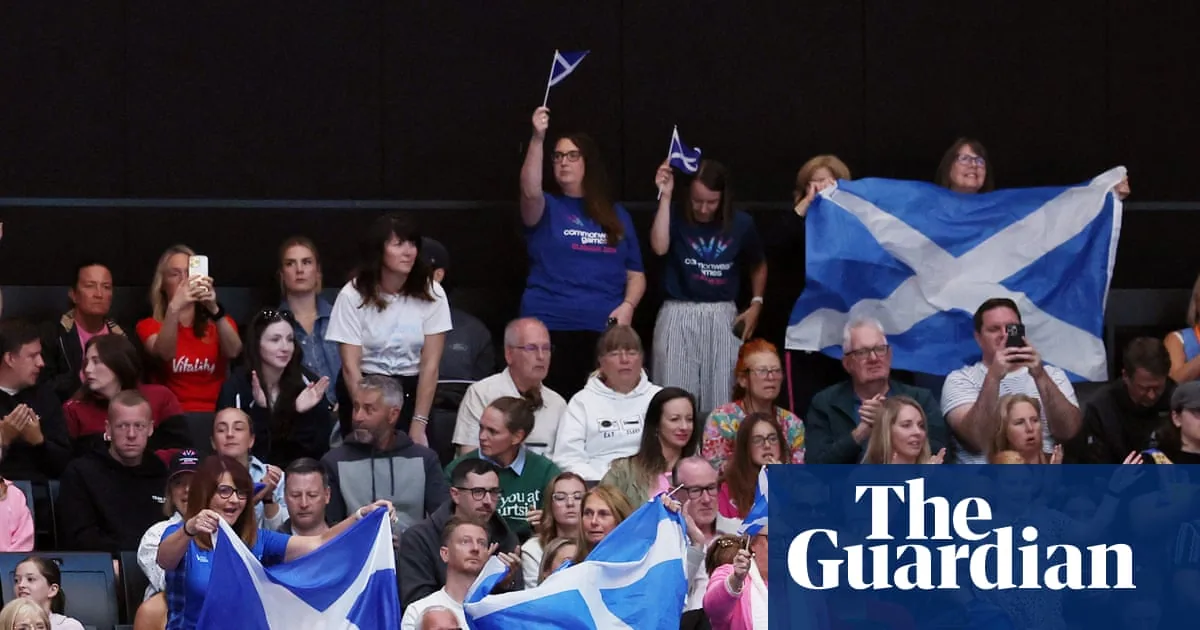
Team Scotland concluded the Glasgow 2026 Commonwealth Games with a total of 39 medals, including 13 golds. This places the performance as the third best in the nation’s history in terms of overall medals. The team also secured nine silver and 17 bronze medals, finishing fifth in the medal table. This represents an improvement of one place compared to the Birmingham Games four years prior, with an identical number of gold medals won.
The Glasgow 2026 Games featured a streamlined sports programme, offering 215 gold medals, a reduction from the 283 available in Birmingham and 261 in Glasgow 2014. Team Scotland had 177 athletes competing, resulting in a medal for every 4.54 competitors, an improvement from the 5.30 ratio recorded four years ago. Chef de mission Elinor Middlemiss expressed pride in the team’s achievements, highlighting the numerous medals, historic firsts, and individual and team records.
Medals were distributed across various disciplines, with only netball and Para-powerlifting not yielding any. Athletics achieved its second-largest haul in 44 years, while gymnastics celebrated a first-ever men’s all-around gold. A record 14 Para-sport medals were also secured. The Games saw a first team sport medal in 3×3 basketball, followed by a second on the same day, and a first-ever podium finish in women’s boxing. Of the 39 medals, 20 were claimed by men, 17 by women, and two by mixed teams, with female athletes accounting for 43% of the medals, consistent with the Birmingham Games.
Key Scottish Athletes and the Games’ Format
Duncan Scott, Scotland’s most decorated Commonwealth Games athlete, added two medals to his tally, bringing his total to 14. However, he did not match his six-medal performance from Birmingham. Para-cyclist Neil Fachie, who had previously retired, secured two gold medals, increasing his gold medal count to seven, surpassing bowler Alex ‘Tattie’ Marshall. Angharad Evans was a standout performer, earning two individual golds along with relay silver and bronze in swimming.
Other multiple medallists included swimmers Keanna MacInnes (three silver, one bronze), Katie Shanahan (two silver), and Stephen Clegg (gold and silver). Para-athlete Melanie Woods won two golds on the track, and closing ceremony flagbearer Reuben Ward achieved gold and silver in gymnastics. Cyclists Erin Boothman claimed double bronze, and Fin Graham secured silver and bronze.
The Glasgow 2026 Games, initially awarded to Victoria, Australia, before its withdrawal due to cost concerns, proceeded with a scaled-down format featuring only ten sports. This approach aimed to provide a financially sustainable model for future host cities. The event received mixed reactions; some viewed it as a successful template for smaller, less expensive games, while others felt it was too stripped back, noting the absence of an athletes’ village and several traditional sports like rugby, squash, and field hockey. The budget for Glasgow 2026 was approximately £150 million, significantly lower than the £778 million spent on Birmingham 2022.
The Games were a television ratings success in countries such as Australia, Canada, and New Zealand. However, in the United Kingdom, the event was not broadcast on free-to-air television, as TNT outbid the BBC for broadcast rights. The next Commonwealth Games in 2030 will be held in Amdavad, India, and is expected to feature between 15 and 17 sports, indicating a move away from the previous one-size-fits-all model while still being larger than the Glasgow 2026 Games.
Source: bbc.com

Freya Donnelly is the Sports Reporter at News-UK, covering tennis, cricket and athletics with seven years of reporting experience. She reported on Team GB through an Olympic cycle. She holds a degree in Sport and Media from the University of Brighton and completed an NCTJ diploma. Based in Brighton, she plays club cricket in the summer. “Listening is the most underrated skill in sports reporting.”