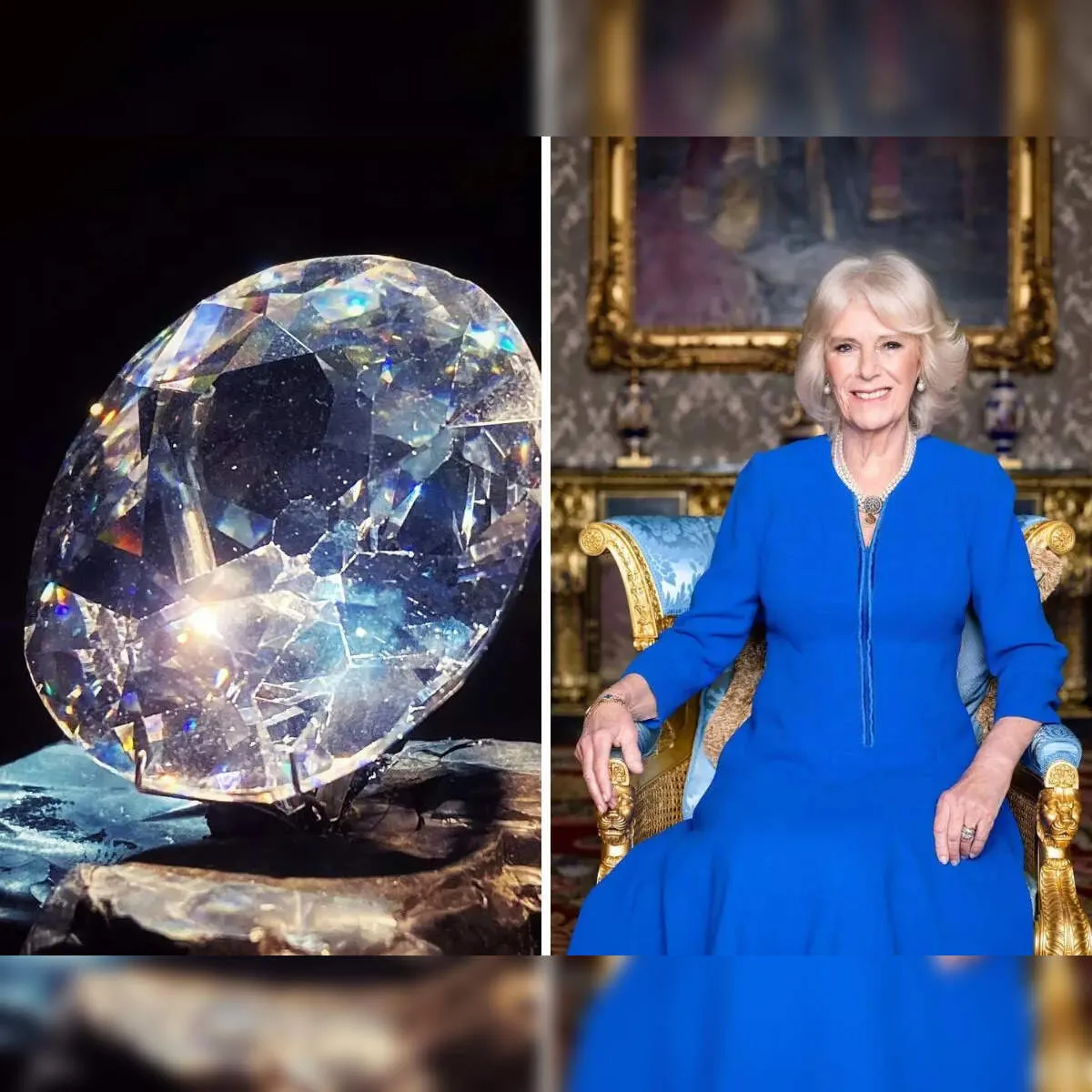

“If I was to speak to the king separately from that, I would probably encourage him to return the Kohinoor diamond,” stated New York City Mayor Zohran Mamdani during a press conference. His remarks reflect a growing movement advocating for the restitution of colonial artifacts, particularly the famed Koh-i-Noor diamond, which has been part of the British Crown Jewels since 1849.
The Koh-i-Noor diamond, originally discovered in India, has a contentious history. It was handed over to the British Crown by Lord Dalhousie following the annexation of Punjab. India claims that the diamond was stolen and has made repeated demands for its return, viewing it as a symbol of historical injustice. The diamond’s journey from India to Britain involved its cession to Queen Victoria as part of the Treaty of Lahore, and it has since become a point of contention in Indo-British relations.
Key facts about the Koh-i-Noor:
- The Koh-i-Noor was originally 793 carats in rough weight but was drastically recut from 186 carats to its current weight of 105.6 carats.
- The diamond is currently stored at the Tower of London.
- Claims to the diamond extend beyond India, with Pakistan, Afghanistan, and Iran also asserting ownership.
- Calls for its return have been a fixture of diplomatic tension since India’s independence in 1947.
Mamdani’s remarks come amid a broader discussion about restitution and colonial artifacts. He emphasized that discussions surrounding such historical items are essential for addressing past injustices. The demand for the Koh-i-Noor’s return not only highlights India’s claims but also reflects a wider movement seeking accountability from former colonial powers.
On another front, historical accounts suggest that “he who owns this diamond will own the world, but will also know all its misfortunes.” This saying encapsulates the complex legacy attached to such artifacts and their symbolic weight in conversations about colonialism and restitution.
As Mamdani continues to advocate for these issues, observers anticipate further developments in how colonial artifacts are treated globally. His position as New York City’s first South Asian, Muslim, and African-born mayor adds a unique perspective to this ongoing dialogue.

Adam Rutherford is a Senior Football Correspondent at News-UK. He spent his early career filing match reports across the North West. He focuses on the Premier League, the EFL and the England national side and is known for clear, deadline-driven reporting. He holds a degree in Sports Journalism from Manchester Metropolitan University and completed an NCTJ diploma. Now based in Manchester, he coaches a youth team and watches grassroots football. “Every transfer window hides a dozen real stories.”