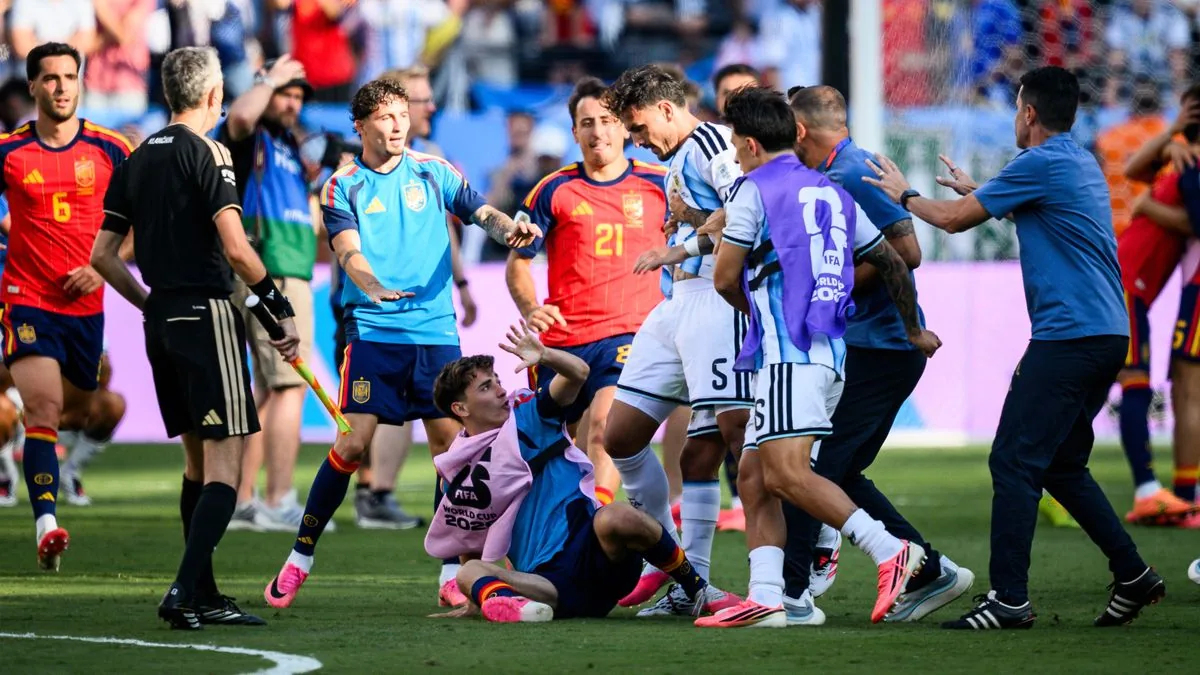

Following the conclusion of the World Cup final, Spain midfielder Gavi has stated his belief that Argentina‘s Leandro Paredes should not be suspended for his involvement in the post-match incidents. The final saw Spain secure a 1-0 victory over Argentina in extra time, but the celebrations were overshadowed by confrontations on the pitch.
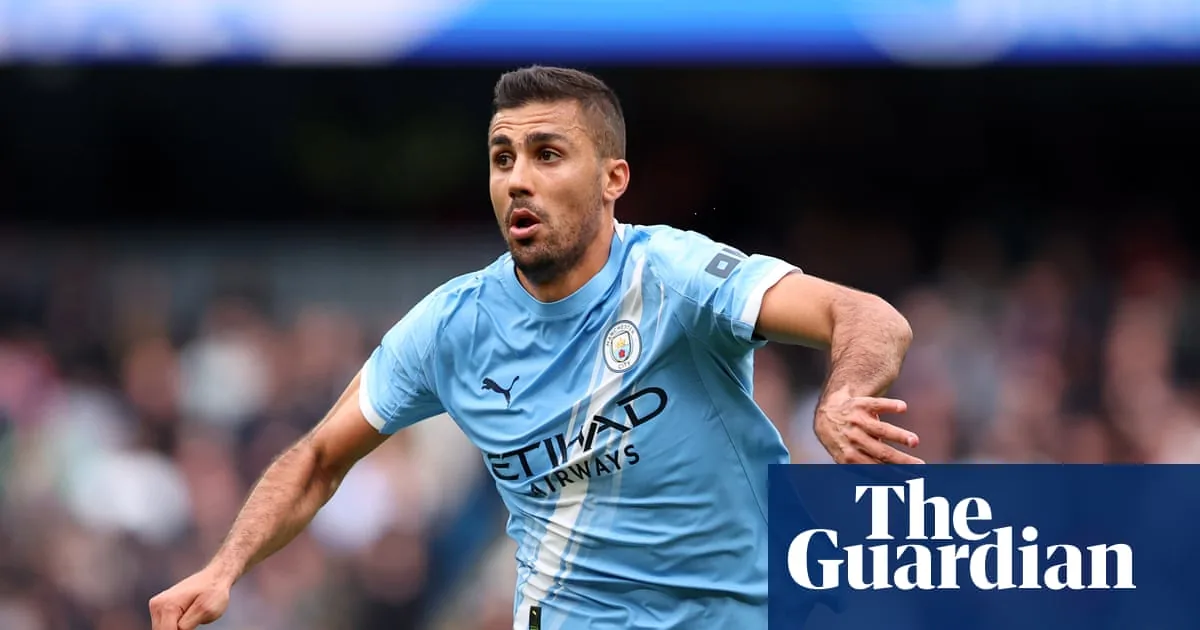
The events unfolded after the final whistle, as Spain’s substitutes ran onto the pitch to celebrate their win. During this time, Argentina’s Nahuel Molina was seen striking Rodri near the halfway line. Rodri, Spain’s captain, then turned to confront Molina, leading to a squaring-up between the two players. Eric Garcia intervened, attempting to prevent the situation from escalating. Paredes then entered the fray, attacking Garcia and sending him to the ground. Despite a linesman’s attempts to separate them, Paredes again confronted Garcia, grabbing him by the throat.
The altercation continued as Paredes then turned his attention to Gavi. Gavi was pushed and pulled by Paredes and Argentina substitute Thiago Almada, who also ripped the Spaniard’s training bib. Gavi fell to the ground and, upon attempting to get up, was thrown down again by Paredes. These incidents led to FIFA appointing a disciplinary and ethics prosecutor to assess the events and determine if any players or coaches involved should receive suspensions. The Argentine Football Association could also face a fine.
Despite being directly involved in the confrontation, Gavi expressed his view to El Partidazo de COPE. He stated, “I don’t think [Paredes] should be suspended.” He acknowledged that the scenes might not present a positive image for children but suggested that such physicality is also a part of football. Gavi added that the most logical action would have been to send Paredes off during the match itself, concluding that these types of incidents are part of the game.
During the match, it was initially reported on FIFA’s commentator information system that Paredes had been sent off by referee Slavko Vincic for pushing Garcia. However, this red card was later deleted from the system, and FIFA confirmed that no disciplinary action was taken at that specific moment. Argentina’s Enzo Fernandez was dismissed during the final, receiving a second yellow card in second-half added time.
The post-match altercations have led to a formal disciplinary investigation by FIFA. This investigation could potentially result in sanctions for several Argentina players and members of the backroom staff. In addition to the on-pitch incidents, FIFA is also investigating Argentina regarding events after their semi-final victory against England, where players displayed a banner with a political message, which may have breached FIFA regulations.
The World Cup 2026 final marked Spain’s second victory in the tournament’s history. The aftermath of the match saw Argentina’s hopes of retaining the World Cup title end with a 1-0 extra-time defeat. The team finished the final with 10 players after Enzo Fernandez’s dismissal and did not register a single shot on target against Spain. The incidents involving Paredes, Molina, Almada, and Gavi occurred as tempers flared after the final whistle.
Despite the controversy and the disappointing end to their campaign, Argentina received a significant reception upon their return home. Thousands of supporters gathered in Buenos Aires to welcome the squad. However, Lionel Messi was a notable absentee, choosing to fly separately to his hometown of Rosario rather than returning with the rest of the team to Buenos Aires.
The FIFA investigation into the post-match events is ongoing, with potential consequences for those involved. Gavi’s intervention highlights a perspective from within the game regarding the nature of such confrontations, suggesting that while not ideal, they are sometimes seen as an inherent part of football.
The final score of the match was 1-0 to Spain.
Read Also
Source: bbc.com

Adam Rutherford is a Senior Football Correspondent at News-UK. He spent his early career filing match reports across the North West. He focuses on the Premier League, the EFL and the England national side and is known for clear, deadline-driven reporting. He holds a degree in Sports Journalism from Manchester Metropolitan University and completed an NCTJ diploma. Now based in Manchester, he coaches a youth team and watches grassroots football. “Every transfer window hides a dozen real stories.”