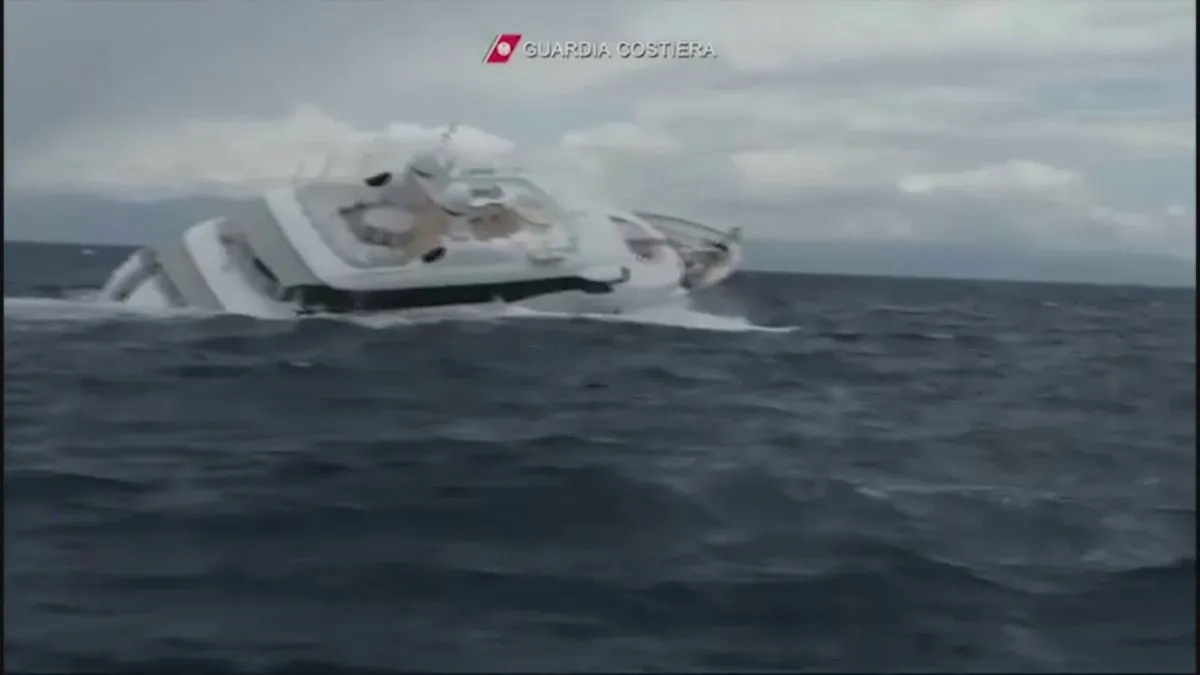

On August 19, 2024, the Bayesian superyacht sank off the coast of Sicily, resulting in the tragic loss of seven lives, including its owner, Mike Lynch, and his daughter. Initial reports suggested that a storm caused the incident; however, investigators have now determined that crew errors played a significant role.
The yacht, measuring 56 meters (184 feet), had 22 people on board at the time of its sinking. The vessel capsized after dragging its anchor and heeling over more than 90 degrees to starboard. Investigators found that improper actions by the crew and failure to activate safety devices contributed to this disaster.
Weather conditions during the incident were deemed less severe than initially thought. Wind speeds of 63.4 knots (73.0 mph) were recorded but classified as ‘little more than a squall’ by investigators. This conclusion contradicts earlier assumptions about a violent storm being responsible for the sinking.
The yacht’s manufacturer described it as ‘unsinkable’ and attributed the tragedy to crew negligence, specifically citing that doors were left open, which compromised stability. The investigation revealed that the yacht’s keel was raised at the time of the incident, further lowering its stability.
As part of ongoing marine accident investigations, Italian prosecutors are considering charges against the yacht’s captain and crew for negligent shipwreck and multiple counts of manslaughter. This development raises serious questions about accountability in luxury yacht operations.
The Bayesian superyacht was recovered from the sea ten months after it sank, allowing forensic examinations to be conducted. The recovery process highlighted challenges associated with yacht safety and crew training.
This incident has significant implications for those involved, particularly for families affected by the tragedy and for regulatory bodies overseeing maritime safety standards. With potential legal repercussions looming, stakeholders are closely monitoring how these events will unfold.

Freya Donnelly is the Sports Reporter at News-UK, covering tennis, cricket and athletics with seven years of reporting experience. She reported on Team GB through an Olympic cycle. She holds a degree in Sport and Media from the University of Brighton and completed an NCTJ diploma. Based in Brighton, she plays club cricket in the summer. “Listening is the most underrated skill in sports reporting.”