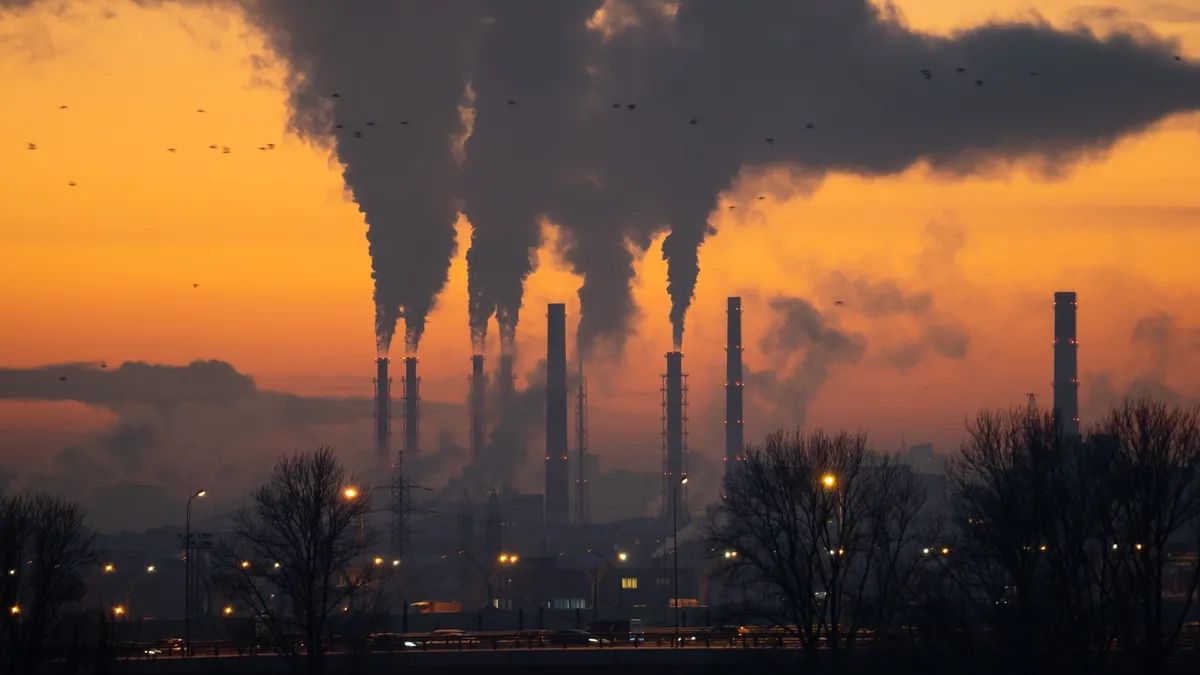

Cleaner air has unexpectedly led to dimmer clouds, contributing to faster ocean warming. Recent studies indicate that a decline in airborne aerosols due to stricter pollution control measures has affected cloud reflectivity, thereby allowing more sunlight to reach the oceans.
Research led by Dr. Knut von Salzen from the University of Washington highlights that marine cloud reflectivity has dropped by roughly 2.8 percent per decade across the North Atlantic and Northeast Pacific. Fewer air particles result in dimmer clouds, which means less sunlight is reflected back into space.
This phenomenon poses significant implications for climate change, as reduced cloud reflectivity can accelerate ocean warming. Dr. von Salzen noted, “We may be underestimating warming trends because this connection is stronger than we knew.” The potential for increased ocean temperatures raises concerns about long-term environmental health.
Meanwhile, the global market for pollution monitoring equipment is projected to grow significantly. The market is valued at approximately USD 18.2 billion as of 2025 and is expected to rise from an index of 100 in 2025 to 193 by 2035, reflecting a compound annual growth rate (CAGR) of 6.8%.
The Asia-Pacific region leads this market with an estimated share of 38%, while North America holds 28%, and Europe accounts for 22%. The oil and gas sector alone represents an estimated 18% share of this market.
Separately, emission regulations have prompted power generation plants to install continuous emission monitoring systems (CEMS) as required by frameworks like the US MATS rule. Wastewater treatment facilities are also increasingly deploying online water quality sensors to comply with discharge permits.
The tightening of pollution controls has been crucial in improving air quality, but it also brings unforeseen consequences such as dimmer clouds and accelerated ocean warming. Ongoing research will continue to explore these connections and their broader impacts on climate dynamics.
No definitive timeline exists for when these changes will stabilize, but the implications for both environmental policy and public health are profound. As cities implement smart city infrastructure aimed at enhancing air quality monitoring, understanding these complex interactions becomes increasingly vital.

Freya Donnelly is the Sports Reporter at News-UK, covering tennis, cricket and athletics with seven years of reporting experience. She reported on Team GB through an Olympic cycle. She holds a degree in Sport and Media from the University of Brighton and completed an NCTJ diploma. Based in Brighton, she plays club cricket in the summer. “Listening is the most underrated skill in sports reporting.”