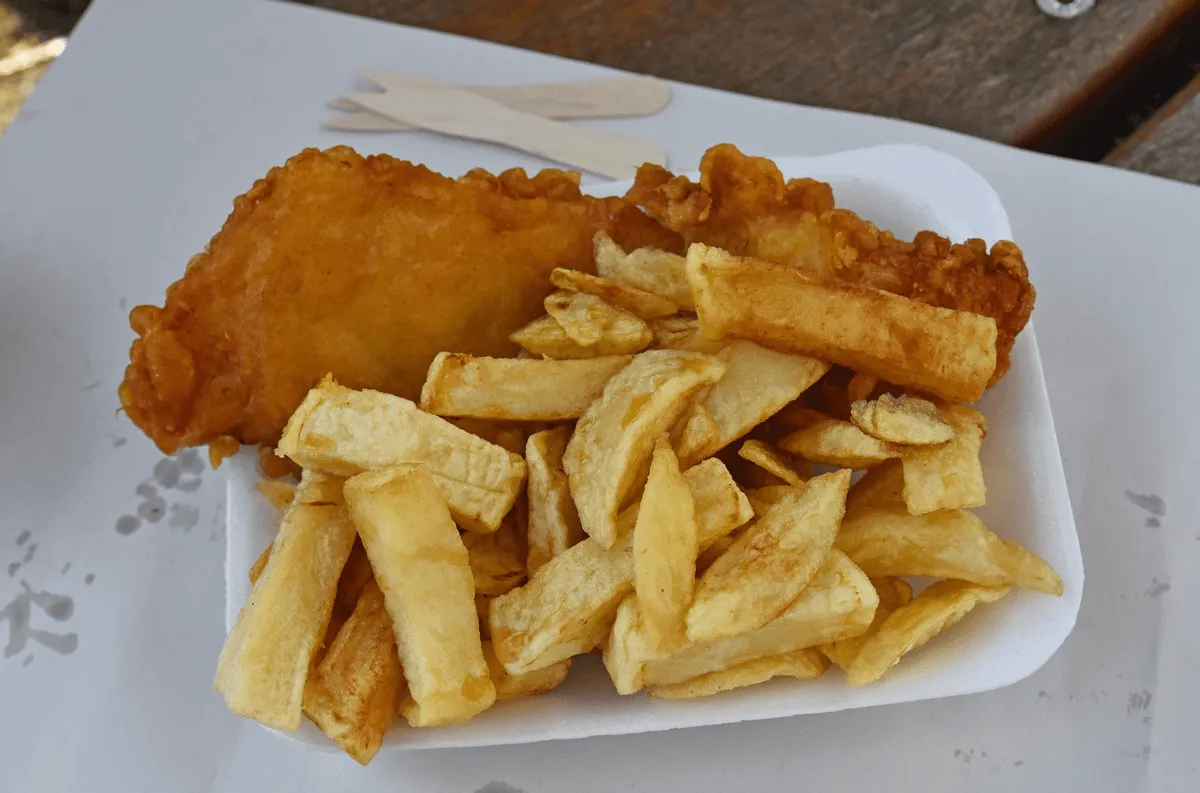

A new study reveals that many UK fish and chip shops are misleading customers by selling catfish instead of traditional fish like cod and haddock. This practice raises significant concerns about food safety and public trust in these establishments.
Key findings:
- Some fish and chip shops in the UK are selling catfish without informing customers.
- DNA testing confirmed that takeaways claiming to sell ‘fish’ were actually serving catfish.
- Approximately 380 million meals are served annually by fish and chip shops in Britain.
Experts like Professor Stefano Mariani have expressed concern over the prevalence of catfish in these meals, noting, “In my experience with fish and chips, three out of 10 is quite a lot – I don’t recall seeing this level of catfish.” This sentiment is echoed by Andrew Crook, who stated that most customers expect a marine species such as cod or haddock when ordering.
Meanwhile, Maryland is addressing its own issues with invasive species like blue catfish. The state has launched an Invasive Blue Catfish Pilot Program aimed at shifting public perception and building markets for this species. Blue catfish pose a threat to native species in the Chesapeake Bay, particularly blue crab.
The Maryland Department of Natural Resources is currently evaluating the risks associated with gill nets used for commercial harvesting of blue catfish. Recently, 6,800 pounds of blue catfish were landed through electrofishing as part of these efforts.
Eating catfish is generally considered safe and a good source of protein. However, experts emphasize the need for transparency in menus, advocating for fish and chip shops to clearly list the species they serve to maintain public trust.

Martha Kingsley is a Birmingham-based writer for News UK covering community, education and local affairs across the UK.