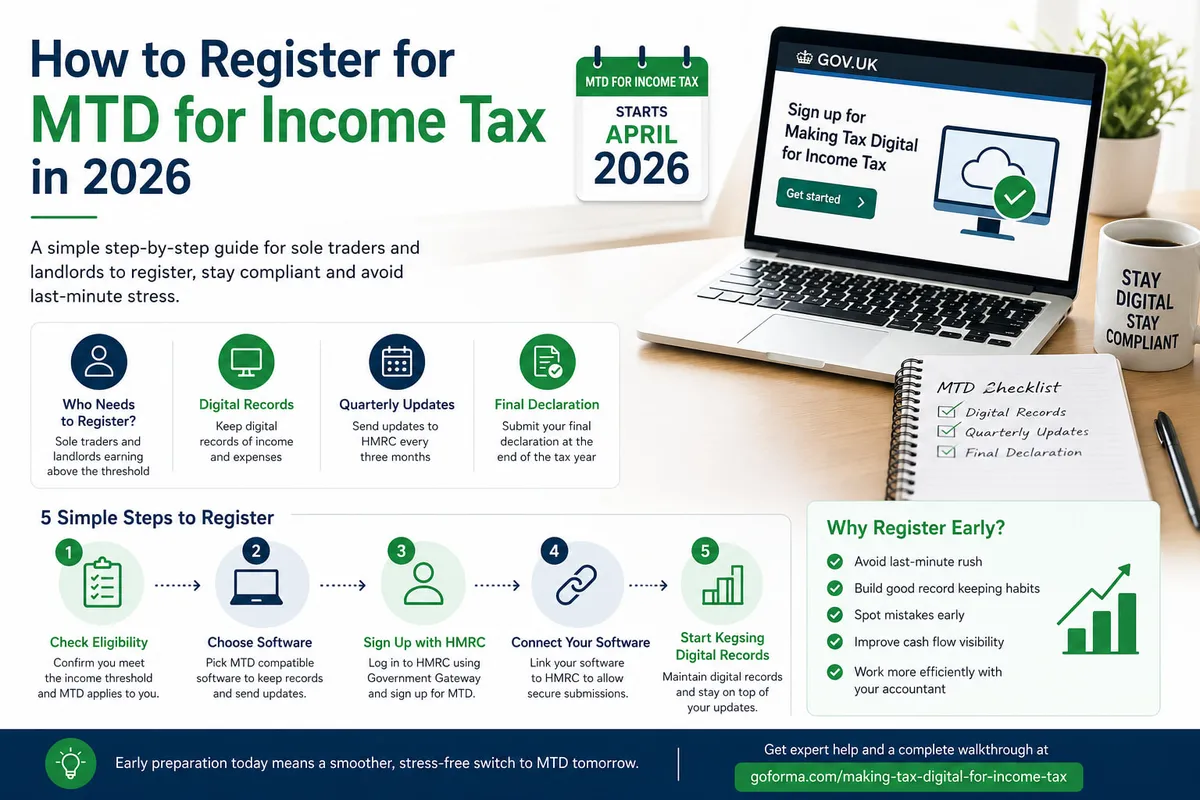

Making Tax Digital for Income Tax is a significant change in how tax reporting is conducted in the UK. This initiative aims to transition tax reporting online, enhancing digital tax reporting and compliance for individuals. Starting in April 2026, it will apply to those with business or property income exceeding £50,000, and by April 2027, this threshold will drop to £30,000.
A recent case highlights the rigidity of HMRC’s rules. Garry Piccolo, a sole trader earning £3,680 in rental income, finds himself compelled to comply with Making Tax Digital despite his earnings falling below the income threshold. His total income exceeds £52,000 when combined with his other earnings—placing him under the MTD mandate.
Piccolo’s situation illustrates a broader issue. He must submit five tax returns annually under MTD, incurring accountancy fees that reach £2,500. “It’s ridiculous,” he expressed regarding the requirement. He added, “The Government says it’s making things easier for the self-employed, but everything you do brings another cost.”
HMRC maintains that its approach aims to provide stability for taxpayers whose incomes fluctuate above and below the thresholds. However, critics argue this inflexibility creates unnecessary burdens on individuals like Piccolo. Michelle Denny-West noted that liability hinges on income levels set for 2024-25; unless a taxpayer’s qualifying income ceases entirely, future changes are irrelevant.
On another front, accountancy firms are grappling with challenges posed by fragmented toolsets that drain billable hours. Richard Creedon remarked on the overwhelming amount of disconnected technology available: “It’s not that there’s not enough technology in the boardroom; it’s that there’s so much technology that’s disconnected.”
In response to these challenges, companies like Intuit QuickBooks are evolving their services. They aim to create an AI-native ecosystem designed for professional practices to facilitate real-time reporting and improve efficiency.
Looking ahead, as more individuals navigate these new requirements under Making Tax Digital, ongoing discussions about its impact on self-assessment and overall tax compliance will likely continue. The government’s commitment to modernizing tax processes remains clear; however, how it balances efficiency with taxpayer needs is still open for debate.

As News-UK's Sports News Writer, Oscar Pennington reports on rugby union, golf and boxing for readers across the country. He built a reputation for sharp explainer pieces on regional sport. He holds a degree in Journalism from Nottingham Trent University and completed an NCTJ diploma. Oscar lives in Nottingham, where he follows the pro golf tour and amateur boxing. “Context is what turns a result into a story.”